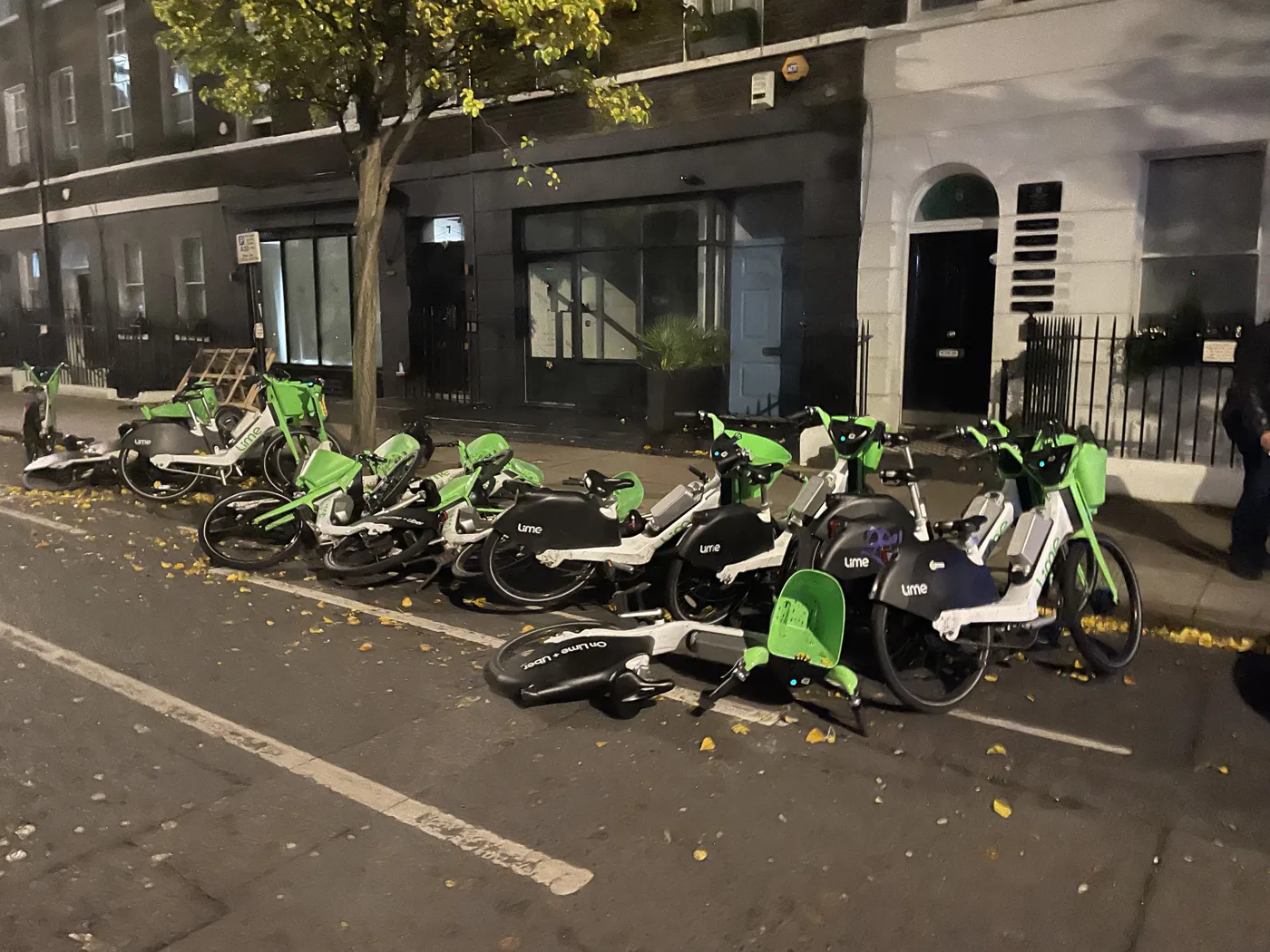

Lime, Voi, Forest and Bolt will share live data and clear badly parked bikes after a council summit. Fines are up nearly 200 per cent since May.
The UK’s four big dockless bike operators, Lime, Voi, Forest and Bolt, have agreed to share live data on their bikes’ movements and to clear carelessly parked machines faster, after their executives were called to a summit by Westminster City Council. (Westminster City Council, 3 August)
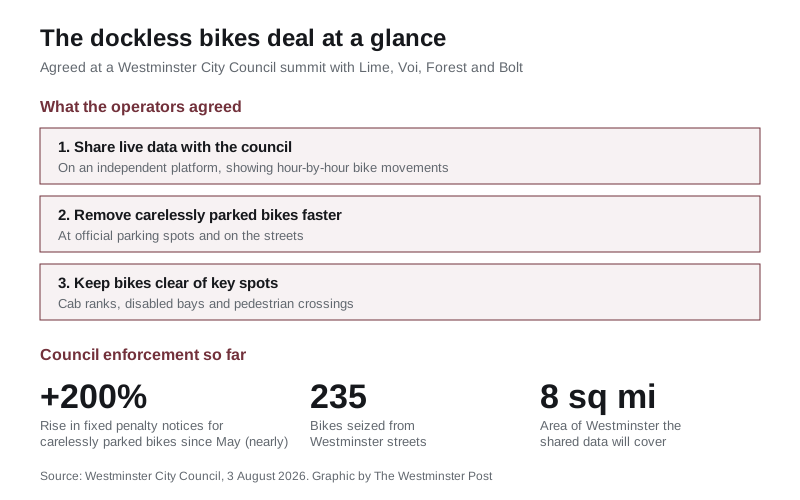
The two-hour meeting, led by council leader Paul Swaddle, produced three commitments: the operators will share data with the council on an independent platform, giving an hour-by-hour picture of bike movements across the city; they will remove more bikes carelessly left at official parking spots and on the streets; and they will work to stop bikes being dumped near cab ranks, disabled bays and pedestrian crossings.
Enforcement has already been stepped up
The deal comes alongside a much harder council line on the street clutter itself. The council says the issuing of fixed penalty notices for carelessly parked bikes has gone up by nearly 200 per cent since May this year, and 235 bikes have been seized from the streets.
Cllr Swaddle said dockless bikes “are here to stay” but that badly parked bikes “have proven a major headache to pedestrians and businesses”, calling it a priority for his administration to sort out. The data, he said, will give a much more accurate assessment of the thousands of machines moving around the eight square miles of Westminster, and the operators themselves are looking at moving parking bays away from cab ranks and disabled bays. The council and the industry have agreed to meet regularly to review whether the measures are working.
The council is also looking at creating more bike parking spaces, including reusing bays left vacant when the car club Zipcar ceased UK operations at the end of 2025.
What the operators say
All four firms welcomed the agreement in the council’s announcement. Bolt’s UK policy lead Georgia Heathman said the firm has shared live data with Westminster since launching in the borough in April, and that 98 per cent of Bolt rides already end with a correctly parked bike, “because poor parking gets fined and repeat offenders get banned”. Forest’s head of policy Alex Berwin said the biggest challenge facing dockless schemes is a shortage of dedicated parking, and welcomed the council’s commitment to explore new bays. Lime said a ward-by-ward approach will help it respond faster in the areas needing most attention, and Voi said data sharing between operators and councils “can help make active travel work for everyone”. (Westminster City Council, 3 August)
What it means for you
If blocked pavements are your problem, the practical changes to watch for are faster removal of dumped bikes, and parking bays moved away from cab ranks, disabled bays and crossings. The council has said it will keep taking enforcement action where needed, so the fines and seizures continue alongside the voluntary deal.
If you ride the bikes, expect more designated parking rather than less: the council is looking at adding bays around the borough, including former Zipcar spaces. Operators are tightening up on bad parking at their end too, with Bolt saying riders who repeatedly park badly get banned.
If you drive or use the buses, clearer pavements and junctions should mean fewer bikes spilling into the road at pinch points. Our Westminster roadworks and travel page carries the current closures and disruption across the borough.
Have your say