
A Saturday hot food pitch on Berwick Street would go from £22 to £42 under the 2027 fees. What every council market would charge, and what traders said.
Stallholders on Westminster’s council markets would pay up to 91% more a day from 1 January 2027. That is under the new fee schedule put to the council’s Licensing Committee on 21 October.
Today every licensed market pitch pays a flat £22 a day, Monday to Saturday, whatever it sells. The new schedule ends that. Each of the six markets gets its own rate, Fridays and Saturdays cost more, and fresh produce and hot food pay extra.
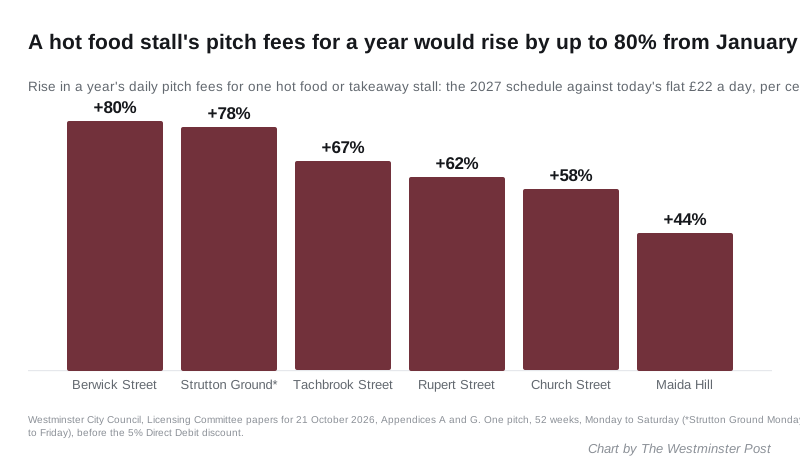
The dearest pitch is a hot food stall on Berwick Street or Strutton Ground on a Saturday: £42, against £22 now. The council’s own sums put a year’s fees for a six-day hot food trader on Berwick Street at £12,376, up from £6,864.
The committee was asked to fix the fees on 21 October. The council has not yet published the minutes or a decision notice, so we cannot yet confirm how members voted or whether they changed anything.
The quick answer
- Today: £22 a day on any council market, Monday to Saturday, for every kind of stall.
- From 1 January 2027: £22 to £42 a day, depending on the market, the day and what you sell.
- Biggest rise: hot food on Berwick Street or Strutton Ground on a Saturday, £22 to £42 (91%).
- Smallest: a non-food stall on Maida Hill, Monday to Thursday, which stays at £22.
- Still there: the 5% discount for paying by Direct Debit.
- Status: recommended to the Licensing Committee on 21 October; the decision has not been published yet.
What each market would charge
The fee schedule sets a base rate for non-food stalls on each market. Fresh produce pays £5 a day more and hot food or takeaway £9 more.
| Market | Non-food, Mon to Thu | Non-food, Sat | Hot food, Mon to Thu | Hot food, Sat |
|---|---|---|---|---|
| Berwick Street, Soho | £30 | £33 | £39 | £42 |
| Strutton Ground, Victoria | £30 | £33 | £39 | £42 |
| Tachbrook Street, Pimlico | £27 | £30 | £36 | £39 |
| Rupert Street, Soho | £26 | £29 | £35 | £38 |
| Church Street, Lisson Grove | £25 | £28 | £34 | £37 |
| Maida Hill | £22 | £25 | £31 | £34 |
Friday is £1 more than Monday to Thursday on every market. The schedule also sets Sunday rates, £2 above Saturday. They apply only where Sunday trading is allowed, and the schedule says a published rate does not itself allow it.
Over a year the gap adds up. The council’s papers work out a year’s fees for one pitch trading every week, Monday to Saturday (Monday to Friday at Strutton Ground):
- Berwick Street: £9,568 for non-food, £12,376 for hot food
- Tachbrook Street: £8,632 to £11,440
- Rupert Street: £8,320 to £11,128
- Church Street: £8,008 to £10,816
- Strutton Ground: £7,852 to £10,192
- Maida Hill: £7,072 to £9,880
At today’s £22 a day, the same six-day pitch costs £6,864 a year, or £5,720 for five days.
Casual traders and new licences
Traders without a licence, who book a pitch day by day as approved casual traders, pay more again. Today they pay £19.44 Monday to Thursday, £28.50 on Fridays and £29.72 on Saturdays. From January a Saturday would cost between £31 and £51, depending on the market and what they sell.
Getting onto a market would cost more too. Today a new market licence application costs £96 for non-food, £126 for fresh produce and £260 for hot food. Under the 2027 schedule:
- a new temporary licence, the usual way in, would cost £187, £267 or £348
- a full street trading licence would cost £964, £1,125 or £1,245
- casual trader registration, now £60, would cost £107 to £187
Our street trading licence guide has today’s fees and how to apply. It will be updated once the new ones are confirmed.
Why the council says fees must rise
The council says the service runs at a loss. Its papers for the June committee put the direct cost of staff, waste and cleansing at about £4.46m a year, against about £2m of street trading income.
Applied to the same recorded trading, the new market fees would raise £1,374,152 a year in gross pitch fees, against £926,640 now. That is a rise of 48%. The report says the figures are illustrations, not forecasts.
The committee report says the fees are meant to recover “reasonable” street trading costs, as the City of Westminster Act 1999 allows. It recommended a single start date of 1 January, with no phasing. Phasing “would reduce the immediate burden but defer the additional contribution towards continuing costs”, it says.
What traders said
The consultation ran from 6 July to 30 September, after an extension. Of the 41 survey responses that answered the question, 20 opposed the new fee structure and 12 supported it. Five were neutral and four did not know.
Of 29 licence holders who answered a question on the impact, 17 said the fees put their business at risk and four reported significant pressure. The council’s report calls these “anticipated effects, not forecasts of closures”.
The main objections, as the report lists them, were affordability, declining footfall, timing, how staff and service costs were shared out, and the extra charges for food. Some respondents backed cost recovery and higher charges for hot food.
The West End Street Traders Association (WESTA), which the report says represents most of the borough’s isolated pitches, won changes for its members. These are the single pitches on their own pavement spot, away from the six markets:
- one daily rate for every commodity, rather than extra for food
- £40 a day Monday to Friday and £50 at weekends in W1 and WC2
- £30 to £45 a day elsewhere in Westminster
- no charge for changing a registered assistant
The report says WESTA still disputes how the council worked out its costs.
What it means for you
If you trade on a council market: check your market, day and commodity in the table above. The 5% Direct Debit discount stays. If the fees are confirmed, the council must send written notice to licence holders. The report says anyone aggrieved by the amount of a fee can appeal to a magistrates’ court within three months of that notice.
If you shop on the markets: the report recognises that higher fees “may affect low-capital businesses, trader retention and access to affordable goods”. The council has promised to review vacancies, surrenders and arrears during the first six months.
If you want to start trading: the council only takes applications for pitches it is advertising as vacant, and the new application fees apply from 1 January.
Sources
- Westminster City Council, Street trading fees and charges 2027 following consultation, report to the Licensing Committee, 21 October 2026, for the recommendation, the consultation results, the start date and the appeal route.
- Appendix A, Street Trading Fees and Charges 2027, for every 2027 fee quoted.
- Appendices B to G, for the isolated pitch changes, the £926,640 and £1,374,152 comparison and the annual fee ranges.
- Licensing Committee report, 11 June 2026, for today’s £22 market fee, the casual trader and application fees, and the £4.46m cost estimate.
- Licensing Committee, 21 October 2026: meeting page, checked 3 November 2026; no minutes or decision published.
Have your say