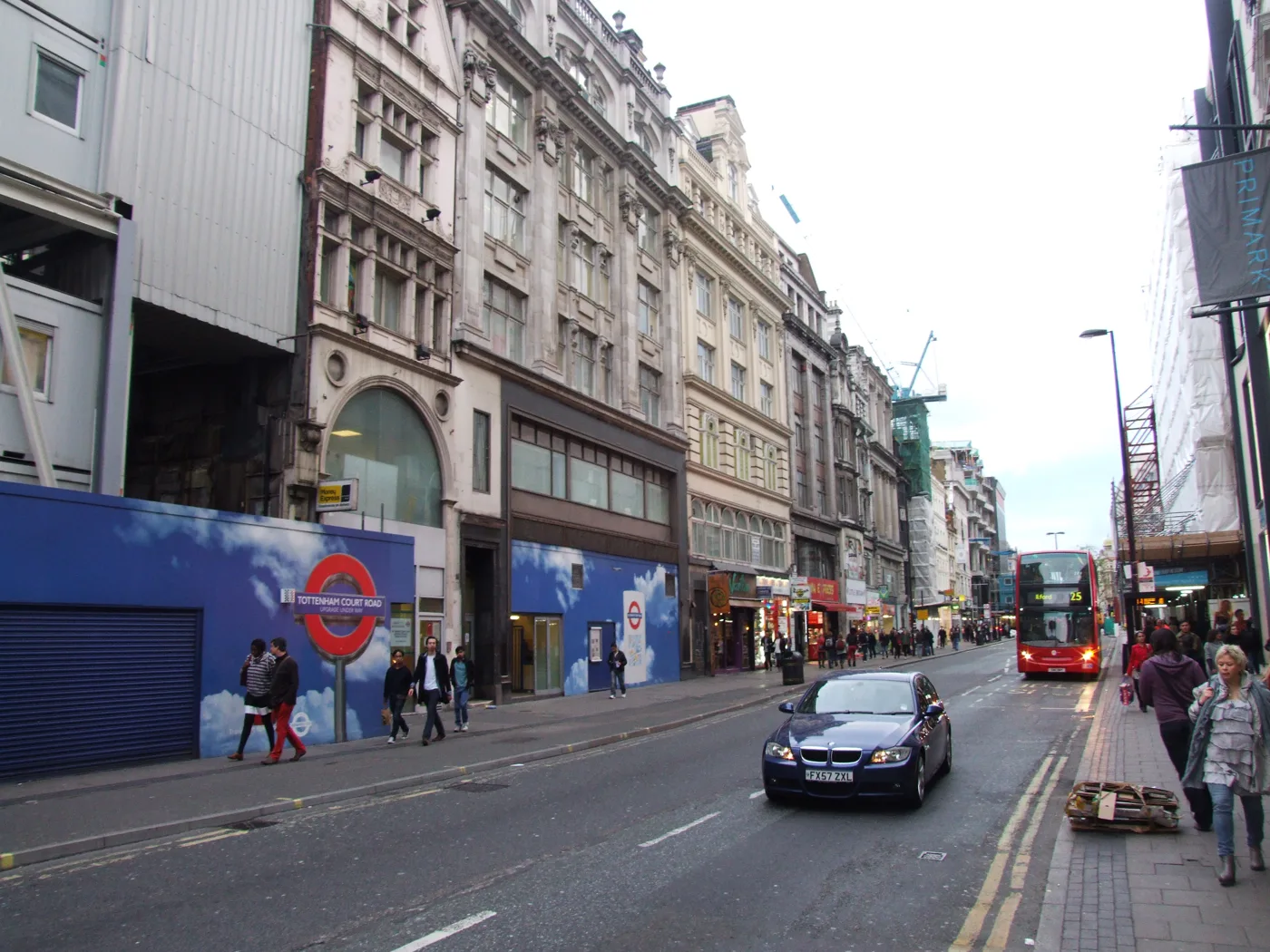

From 10 August the Oxford Street Development Corporation, not Westminster, decides planning there. Plus the new City Plan consultation, open until 11 December.
Two things are happening to Westminster planning at once, and they pull in opposite directions. The council has just lost control of the most valuable street in the borough. It has also just started writing a completely new City Plan for everywhere else, and the first chance to have a say on it is open now.
From 10 August, Westminster is not the planning authority for Oxford Street
The Oxford Street Development Corporation (Functions) Order 2026 comes into force on 10 August 2026. From that date the Corporation, not Westminster City Council, is the local planning authority for the Oxford Street development area under Part 3 of the Town and Country Planning Act 1990.
The order was made on 14 July 2026 and laid before Parliament on 16 July. It also hands the Corporation listed building and conservation area functions, hazardous substances consent and tree preservation powers within the same area, and it carries transitional provisions: an application, appeal, enforcement action or section 106 agreement that Westminster was in the middle of before 10 August can be continued by the Corporation and is treated as if the Corporation had done it. The Corporation is not obliged to continue anything.
The Corporation itself was established on 1 January 2026 by a separate order. The development area covers Oxford Street and its surroundings across both Westminster and Camden, and the boundary is fixed by a map deposited with the Ministry of Housing, Communities and Local Government and the Greater London Authority rather than described in words.
What Westminster negotiated. The council’s own account of the process sets out what it got in exchange. The Mayoral development area was reduced to one block either side of Oxford Street, with the council remaining responsible for everything outside the boundary. Bus services will continue along the eastern section from Oxford Circus to Tottenham Court Road rather than that stretch being pedestrianised. The council has three seats on the Corporation’s board. And the Mayor agreed a mechanism to let Westminster keep development funds collected in the area, covering strategic infrastructure, carbon offset, employment and skills and affordable housing, so that money raised on Oxford Street is not lost to the rest of the borough.
Separately, the council began the process in September 2025 of handing Oxford Street itself to Transport for London as part of its strategic road network, making TfL the highway authority. Westminster remains the licensing authority.
The new City Plan: have your say by 11 December
Westminster started work on a completely new City Plan in July 2026, and the first formal consultation is open now.
The council gave notice of its intention to begin plan-making on 31 July 2026 and published a timetable on 16 July. The plan will set the vision, site allocations, local policies and spatial strategy for the whole City of Westminster up to 2041.
| Stage | Dates |
|---|---|
| Notice of intention to commence | 31 July 2026 |
| Scoping consultation | 1 August to 11 December 2026 |
| Gateway 1 assessment | 25 March 2027 |
| Evidence base, policies and informal engagement | April 2027 to February 2028 |
| Consultation on the draft plan | 15 March to 26 April 2028 |
| Gateway 2 assessment | 16 August to 27 September 2028 |
| Further consultation | 18 October to 13 December 2028 |
| Gateway 3 and examination | 14 February 2029 |
| Examination in public | 28 March to 28 September 2029 |
| Adoption | 25 October 2029 |
Read that timetable honestly and the scoping consultation now open is the last open-ended stage. By March 2028 there will be a draft with numbers and sites in it, and the argument will be about amendments. The window between now and 11 December is when the questions themselves are still being set. The council says it will build on the early engagement it ran in 2025.
What is currently adopted, and the housing target
The plan in force is the City Plan 2019-2040 (2026), adopted on 21 January 2026. It replaced the 2021 version of the same plan. The change was a Partial Review begun in late 2022, and it was deliberately narrow: a revised affordable housing policy, a new retrofit-first policy and four site allocations. The overarching housing target was not in its scope.
That target therefore still comes from the London Plan 2021, whose Table 4.1 sets Westminster a ten-year requirement of 9,850 net new homes between 2019/20 and 2028/29, which is 985 a year. Two features of that number are worth knowing.
More than half of it is supposed to come from small sites. The London Plan’s Table 4.2 gives Westminster a small-sites target of 5,040 homes out of the 9,850. Half the borough’s housing target depends on infill, conversions and extensions rather than the big schemes that make the news.
Delivery has been close to the line, not comfortably over it. The council’s own published position is that on the 2022 Housing Delivery Test, covering 2019/20 to 2021/22, Westminster’s requirement was 2,542 homes and 2,508 were delivered, 99%. Because that is above 95%, no further action was required. The 2021 test came out at 96% and the 2020 test at 92%, which did trigger an action plan.
The next target will be set by the London Plan review the Mayor is preparing, and the evidence for it is the Greater London Authority’s new Strategic Housing Land Availability Assessment. The GLA ran its call for sites from 18 September to 30 November 2024 and now runs land supply as a live database rather than a point-in-time study. Only sites of 0.25 hectares or more go through that process.
How to comment on a planning application in Westminster
Outside the Oxford Street development area, Westminster still runs its own register. Applications are published on the council’s Public Access portal, where you can search by address, postcode or reference, read the documents and submit a comment during the consultation period. Most of the borough is either listed or in a conservation area, so applications that would be permitted development elsewhere often need consent here.
For anything inside one block of Oxford Street, from 10 August the decision-maker is the Oxford Street Development Corporation.
Frequently asked questions
Who decides planning applications on Oxford Street now?
The Oxford Street Development Corporation, from 10 August 2026, under the Oxford Street Development Corporation (Functions) Order 2026. Before that date it was Westminster City Council for the Westminster side and Camden for the Camden side.
Is Oxford Street being pedestrianised?
Partly. The Mayor’s plan covers the western section, and Westminster negotiated that buses will continue to run along the eastern half, from Oxford Circus to Tottenham Court Road, rather than that stretch being pedestrianised. The Corporation now controls the planning side and TfL the road itself.
What is Westminster’s housing target?
985 homes a year, or 9,850 over the ten years from 2019/20 to 2028/29, set by Table 4.1 of the London Plan 2021. Of that, 5,040 is expected to come from small sites.
Is Westminster meeting its housing target?
On the most recent Housing Delivery Test the council has published, it delivered 2,508 homes against a requirement of 2,542, or 99%, over 2019/20 to 2021/22. That is a pass, but a narrow one, and it is now several years old.
What is the current Westminster local plan?
The City Plan 2019-2040 (2026), adopted on 21 January 2026. A brand new City Plan running to 2041 is being written now and is not due to be adopted until 25 October 2029.
How do I comment on the new City Plan?
The scoping consultation is open from 1 August to 11 December 2026. Details and the timetable are on the council’s New City Plan page, and the planning policy team can be reached at planningpolicy@westminster.gov.uk.
Related
- Westminster house prices: only 18 of 1,885 sales last year were new build, which is what a 985-a-year target is up against.
- Westminster roadworks and travel: the road works and closures around the Oxford Street programme.
- Things to do in Westminster: the listed buildings all this policy is written around.
Sources
- The Oxford Street Development Corporation (Functions) Order 2026, SI 2026/831 for the 10 August 2026 commencement date, the transfer of local planning authority status and the transitional provisions.
- The Oxford Street Development Corporation (Establishment) Order 2025, SI 2025/1151 for the Corporation’s establishment on 1 January 2026 and the development area.
- Westminster City Council: latest on Oxford Street for the boundary reduction, the eastern bus commitment, the three board seats, the development funds mechanism and the TfL road designation.
- Westminster City Council: New City Plan and its City Plan timetable, July 2026 for every date in the timetable table and the 2041 plan period.
- London Plan 2021, Chapter 4: Housing for the 9,850 ten-year target in Table 4.1 and the 5,040 small-sites target in Table 4.2.
- Westminster City Council: housing evidence for the Housing Delivery Test results for 2020, 2021 and 2022.
- Westminster City Council: SHLAA 2025 call for sites for the GLA’s land supply work.
Planning timetables slip and consultation dates move. Check the council’s own pages before you rely on a date here.
Have your say