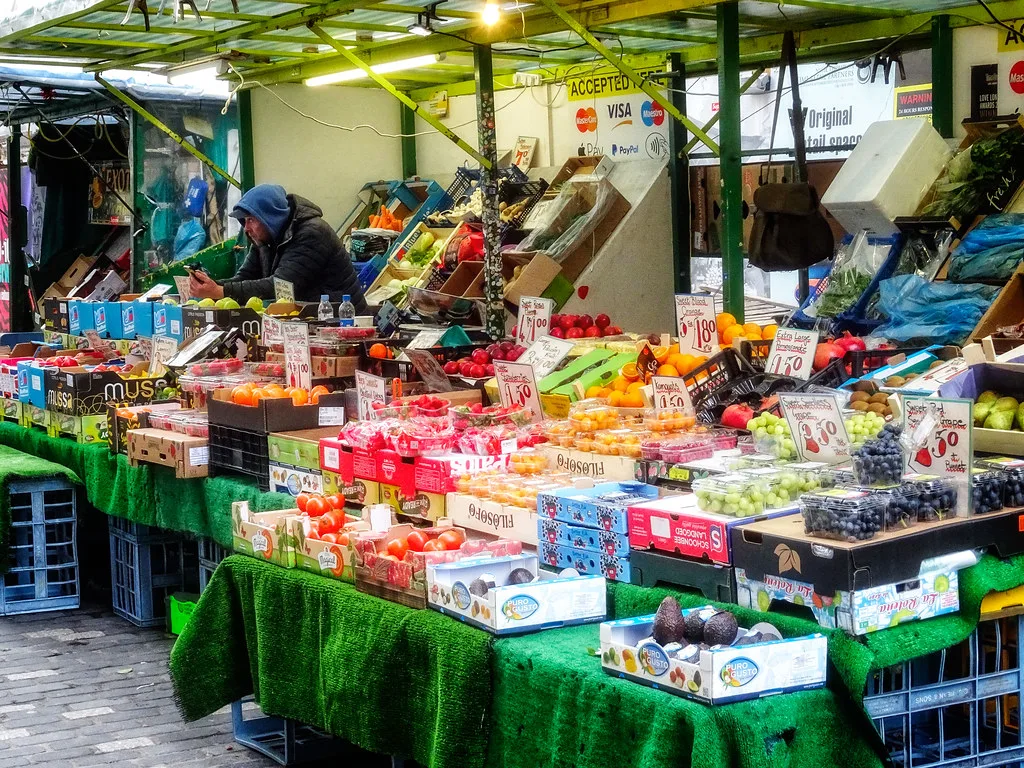

A Westminster street trading licence costs £96 to £260 to apply for, then £22 a day for a market pitch. Which markets have vacancies and how to apply.
A street trading licence in Westminster costs £96 to apply for if you sell non-food goods, £126 for fresh produce and £260 for hot takeaway food, and a market pitch then costs £22 a day. Start-up businesses pay half the application fee and Westminster residents get 20% off. The catch is that the council only accepts applications for pitches it is advertising as vacant: apply for a pitch that is not on a vacancy register and the form will not be considered.
Most new traders start on a temporary licence, which lasts up to six months and is then renewed in line with its conditions. If you just want to try a market first, the “pay as you go” casual trader route costs £60 to register and from £19.44 a day after that. Everything below is from the council’s street trading pages, checked on 19 October 2026.
Which licence do you need?
| Licence | What it lets you do | Who it suits |
|---|---|---|
| Temporary licence | Trade from one market pitch on set days, for up to six months at a time | Most new market traders |
| Casual trader registration | Pre-book any available pitch, day by day, on the council’s markets | Non-food traders testing a market; no food or drink |
| Street trading licence (isolated pitch) | Trade from a fixed pitch away from a market | No vacancies at present |
| Exhibition licence | Display and sell art on the Bayswater Road or Green Park railings | Artists |
Westminster’s own page says temporary licences are “the most commonly issued licences in Westminster”, because several markets are being redeveloped and the council wants flexibility over pitches. Full permanent licences exist but are rarely offered to newcomers.
The legal basis is the City of Westminster Act 1999, not the national street trading rules most councils use, which is why Westminster’s process looks different from neighbouring boroughs.
Application fees
These are the fees for market pitches, as listed by the council (last updated 13 July 2026):
| Application | Standard fee | Start-up business (50% off) | Westminster resident (20% off) |
|---|---|---|---|
| New licence to sell hot takeaway food | £260 | £130 | £208 |
| New licence to sell fresh produce | £126 | £63 | £101 |
| New licence to sell non-food items | £96 | £48 | £77 |
| Minor variation (add or remove days or goods in the same category) | £60 | £30 | £48 |
| Casual trader registration | £60 | n/a | £48 |
| Further temporary licence | £19 | n/a | n/a |
| Registering an assistant | £19 | n/a | n/a |
Charity and community stalls pay nothing. If you qualify for both discounts, the council applies the bigger one. An isolated pitch application costs £93.73, and an exhibition licence £95.79.
You pay by card over the phone on the Street Licensing duty line, 07866 019686, Monday to Friday 10am to 4pm.
Pitch fees
Once licensed, you pay a daily pitch fee, invoiced every four weeks:
| Pitch | Daily fee | With 5% direct debit discount |
|---|---|---|
| Any council market, Monday to Saturday | £22.00 | £20.90 |
| Casual trader, Monday to Thursday | £19.44 | n/a |
| Casual trader, Friday | £28.50 | n/a |
| Casual trader, Saturday | £29.72 | n/a |
| Isolated pitch in W1 or WC2, Monday to Thursday | £24.72 | £23.48 |
| Isolated pitch in W1 or WC2, Sunday | £57.68 | £54.80 |
The market pitch fee has stayed at £22 a day since 1 July 2020. Isolated pitches outside W1 and WC2 are cheaper, from £19.06 on weekdays, and ice cream sellers on isolated pitches get 75% off from October to March. Paying by direct debit takes 5% off.
The council’s markets and what each will take
| Market | Trading | Taking applications for | Notes |
|---|---|---|---|
| Berwick Street, W1 (Soho) | Monday to Saturday | Temporary licences, food and non-food | Good for casual traders |
| Church Street, NW8 (Lisson Grove) | Weekdays and Saturdays, separate registers | Saturday and weekday pitches | Hot food only on weekdays, pitches 537 to 567 and 655 to 660; pitches 3m by 3m |
| Rupert Street, W1 (Soho) | Monday to Saturday, 3pm to 10pm | Curated night market, chosen on quality | Electricity; the only council market with food truck spaces |
| Strutton Ground, SW1 (Victoria) | Monday to Friday | Temporary licences | No electricity; pitches 3m by 3m |
| Tachbrook Street, SW1 (Pimlico) | Monday to Saturday | Non-food only | Electricity pay-per-use |
| Maida Hill, W9 | As advertised | Food and non-food | Food stalls must use electric equipment only, no gas |
Each market has its own vacancy register on the council website, listing which pitch numbers are free on which days. Rupert Street is the exception to first come, first served: traders are picked on “product quality, presentation, and alignment with the market’s vision”. Elsewhere, if two people apply for the same pitch on the same day, the council favours the goods the market needs, start-ups and enterprise scheme applicants, and whoever applies for more days.
The farmers’ markets in Marylebone and Pimlico are run privately by London Farmers’ Markets. You apply to them, though stallholders still need a street trading licence.
How to apply, step by step
- Pick a pitch from a vacancy register. Only advertised vacancies are considered, and there are currently none on isolated pitches.
- Get public liability insurance of at least £2 million. Proof has to go in with the application.
- For food, read the council’s street trader guidance before you fill in the form, and register your food business with Westminster’s environmental health team.
- Apply online on the council’s “become a market trader” page and pay the fee.
- Wait for consultation. Food applications go through a 15 working day consultation with city inspectors and environmental health; non-food applications take 10 working days. The council replies within 5 working days after that. With no objections, the licence is granted; an objection can lead to a hearing.
- Pass the first-day inspection. An officer checks your stall set-up on or soon after your first day, and food traders may be asked for food safety records.
Your stall must fit within its pitch footprint and be made of fire-retardant materials meeting BS 7837, you need your own fire safety equipment, and all traders must use sustainable packaging. Parking and storage are your problem at most markets.
Rules once you are trading
City inspectors enforce licence conditions with a penalty point scheme: 25 points or more within six months and the council will consider revoking the licence. The scheme itself is under review. Assistants have to be registered, and pitch fees are payable as soon as the four-weekly invoice arrives.
You do not need a street trading licence to sell from the private forecourt of your own shop during opening hours, but that exemption does not cover restaurants or pubs, and you may have to prove the land is private with Land Registry documents. Tables and chairs on the pavement need a separate pavement licence.
The rules are being rewritten
Westminster is refreshing its Street Trading Policy, which dates from 2013, and its Markets Strategy, as part of a Street Markets Transformation Programme. Its survey of traders, residents and visitors closed on 30 September 2026. Fees, pitch allocation and the penalty point scheme could all change when the new policy is published, so check the council’s pages again before you apply.
Frequently asked questions
How much is a street trading licence in Westminster? The application fee is £96 for non-food goods, £126 for fresh produce and £260 for hot takeaway food, with 50% off for start-ups and 20% off for Westminster residents. A market pitch then costs £22 a day.
How long does a Westminster street trading application take? Non-food applications have a 10 working day consultation and food applications 15, with a decision within 5 working days after that if nobody objects.
Can I sell food as a casual trader in Westminster? No. Casual trader registration is for non-food traders only. Food traders need a temporary licence for an advertised pitch.
Do I need insurance to trade on a Westminster market? Yes. You must show public liability insurance with at least £2 million of cover before a licence is granted.
Are there any isolated street trading pitches available? Not at present. The council says there are no vacancies on any isolated pitch and it is not accepting applications for them.
Do I need a licence to sell outside my own shop? Not on a private forecourt that belongs to the shop, during opening hours, as part of the shop’s business. Restaurants and pubs are not covered by that exemption.
Sources
- Westminster City Council: become a market trader, application fees (markets), pitch fees, market vacancy pages, private forecourts, penalty point scheme and the Street Trading and Markets Survey 2026 (all read 19 October 2026)
- City of Westminster Act 1999
Have your say