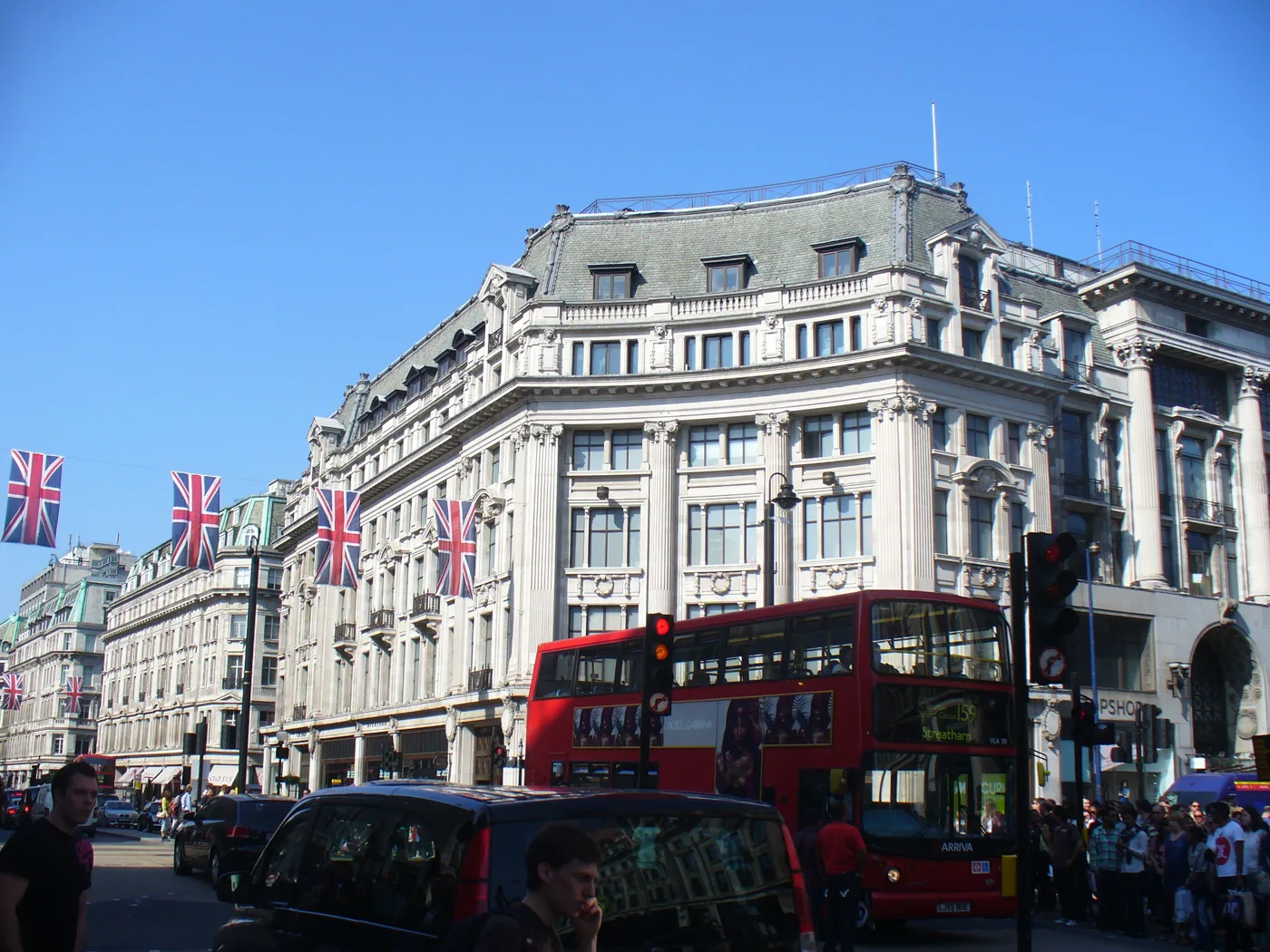

Westminster says ministers ignored its concerns and cleared Oxford Street without a full environmental assessment. Its lawyers said a challenge would fail.
The government has decided the Oxford Street pedestrianisation scheme can go ahead without a full Environmental Impact Assessment.
Westminster City Council announced the outcome on Friday 4 September, in a statement that made its own position plain. Cllr Tim Barnes, the council’s Deputy Leader, said the council was “extremely disappointed that MHCLG have ignored legitimate concerns about the impact this scheme will have on central London”.
That is one week after the council wrote to the ministry demanding the opposite.
What the council said
Cllr Barnes’s statement is short and it is the only account of the decision anyone has published. His central complaint is about scale rather than principle:
“Rushing pedestrianisation to meet the Mayor’s arbitrary deadline will be a disaster for local people, businesses and visitors. The Mayor’s own submission to MHCLG showed air pollution and noise rising. We need to know how much, and how far, those problems will spread.”
He listed the questions the council says are still open:
- managing traffic displaced off Oxford Street
- noise on the streets that take that traffic
- the impact on air quality
“We’ve consistently said that if pedestrianisation must happen we’ll help to make it work,” he said. “London deserves a world class shopping district but I’m worried we’re heading for an unmanaged mess.”
The statement ends with the council saying it “will review the details of this decision and consider our next steps”.
What is not on the record
Two things are worth being precise about, because they change how much weight the statement carries.
The Ministry of Housing, Communities and Local Government has not published the decision itself. Neither has Transport for London. As of Saturday 5 September there is no screening direction, no press notice and no explanation of the reasoning on either body’s website, and TfL has said nothing publicly about it. Everything known about the decision comes from the losing party’s press release.
The council’s statement also does not say what the decision covers, when it was issued, or on what terms. It does not use the words “no assessment is required”. It refers only to “this decision” and to concerns being ignored.
The council has already tested the legal route once
“Consider our next steps” is a familiar line at Westminster, and the council has published what happened last time it looked at the law.
On 29 May 2026, three months after the Mayor signed the decision that authorised the scheme, the council said it had sought additional legal advice, on the instruction of its new Leader, on whether there were grounds to challenge the pedestrianisation plans. Its statement set out the answer without softening it: a judicial review “would be unlikely to succeed”, and “submitting a late claim for judicial review would result in refusal”.
The council said then that this was “not the end of the road” and that it was considering other legal and procedural options. Council Leader Paul Swaddle wrote to the Mayor of London asking for a meeting.
That is the position the council returns to now, with one difference. A screening decision is a fresh decision, and a fresh decision carries its own timetable for any challenge. Whether the council intends to test that is exactly what its statement does not say.
On the street, nothing has changed
The scheme’s visible start is the diversion of buses off Oxford Street West, the stretch between Great Portland Street and Orchard Street. That has not begun.
Checked against TfL’s own route data at 09:20 on Saturday 5 September, all five daytime routes still call on the street:
- route 7, stopping at Selfridges and Oxford Street / John Lewis
- route 94, stopping at Selfridges, Oxford Street / John Lewis and Oxford Circus
- route 98, stopping at Selfridges and Oxford Street / John Lewis
- route 139, stopping at Orchard Street / Selfridges and Oxford Street / John Lewis
- route 390, stopping at Selfridges and Oxford Street / John Lewis
TfL’s plan diverts those services mainly onto Wigmore Street, with replacement stops roughly 100 to 200 metres from Oxford Street. Preparing Wigmore Street for them means street works. TfL’s live road disruption feed, checked at the same time, lists no works at all on Wigmore Street, Oxford Street, Orchard Street or Great Portland Street.
The Mayor’s own target, set out when he announced the next steps on 4 March 2026, was traffic-free “by the end of this summer”. Summer ended on 31 August.
What it means for you
- Do not replan a journey yet. Buses 7, 94, 98, 139 and 390 are still running along Oxford Street. Nothing has been diverted.
- Watch Wigmore Street. The first physical sign the scheme is starting will be works there to prepare the bus diversion, not a closure on Oxford Street. Our roadworks and travel page tracks the live TfL feed for Westminster daily.
- If you live on a displacement route, TfL’s own modelling names streets. The largest modelled increase in nitrogen dioxide is 2.1 micrograms per cubic metre, at a ground-floor residence on Upper Brook Street in Mayfair. That figure is in TfL’s air quality assessment, published with the consultation.
- There is no consultation to respond to. The consultation closed on 16 January 2026. The council is now the only body still formally objecting, and it has not said whether it will do anything beyond objecting.
- Planning on Oxford Street is not the council’s job any more. Since 10 August the Oxford Street Development Corporation decides applications within one block either side. See our Westminster planning news page.
Frequently asked questions
Does Oxford Street still need an environmental impact assessment?
No. Westminster City Council said on 4 September 2026 that the Ministry of Housing, Communities and Local Government has decided against requiring one, and that it was “extremely disappointed”. Neither the ministry nor Transport for London has published the decision itself.
When will Oxford Street be pedestrianised?
No date has been published. Mayoral Decision MD3475, signed on 26 February 2026, set delivery as “Summer 2026, subject to approvals”, and the Mayor’s announcement of 4 March 2026 promised traffic-free “by the end of this summer”. Summer ended on 31 August 2026 with nothing removed from the street.
Are buses still running along Oxford Street?
Yes. Checked against TfL’s own route data on 5 September 2026, routes 7, 94, 98, 139 and 390 all still call on Oxford Street, at stops including Selfridges and Oxford Street / John Lewis.
Where will the buses go when it closes?
Mainly onto Wigmore Street, with replacement stops roughly 100 to 200 metres from Oxford Street. TfL’s live road disruption feed listed no works on Wigmore Street on 5 September 2026, so that preparation has not started.
Can Westminster City Council still stop the scheme?
Its statement says only that it will “review the details of this decision and consider our next steps”. In May 2026 the council published legal advice that a judicial review of the pedestrianisation plans would be unlikely to succeed and that a late claim would be refused.
Sources
- Westminster City Council: Statement on Oxford Street, published 4 September 2026, for every quote from Cllr Tim Barnes and for the council’s account of the MHCLG decision.
- Westminster City Council: Council demands full Environmental Impact Assessment on Oxford Street scheme, 28 August 2026, for the council’s letters to TfL and the ministry.
- Westminster City Council: Statement on Oxford Street, 29 May 2026, for the legal advice that a judicial review would be unlikely to succeed, that a late claim would be refused, and for Paul Swaddle’s letter to the Mayor.
- Mayoral Decision MD3475, signed 26 February 2026, for what was approved and the “Summer 2026, subject to approvals” delivery line.
- Mayor of London: Mayor confirms next steps to make world-famous Oxford Street traffic-free by the end of this summer, 4 March 2026, for the end-of-summer target.
- TfL: Oxford Street proposals for transport and highway changes for the Wigmore Street diversion, the stop distances and the consultation closing date, and the air quality assessment for the Upper Brook Street receptor.
- TfL Line Route Sequence API and TfL road disruption feed, both checked at 09:20 on 5 September 2026.
Have your say