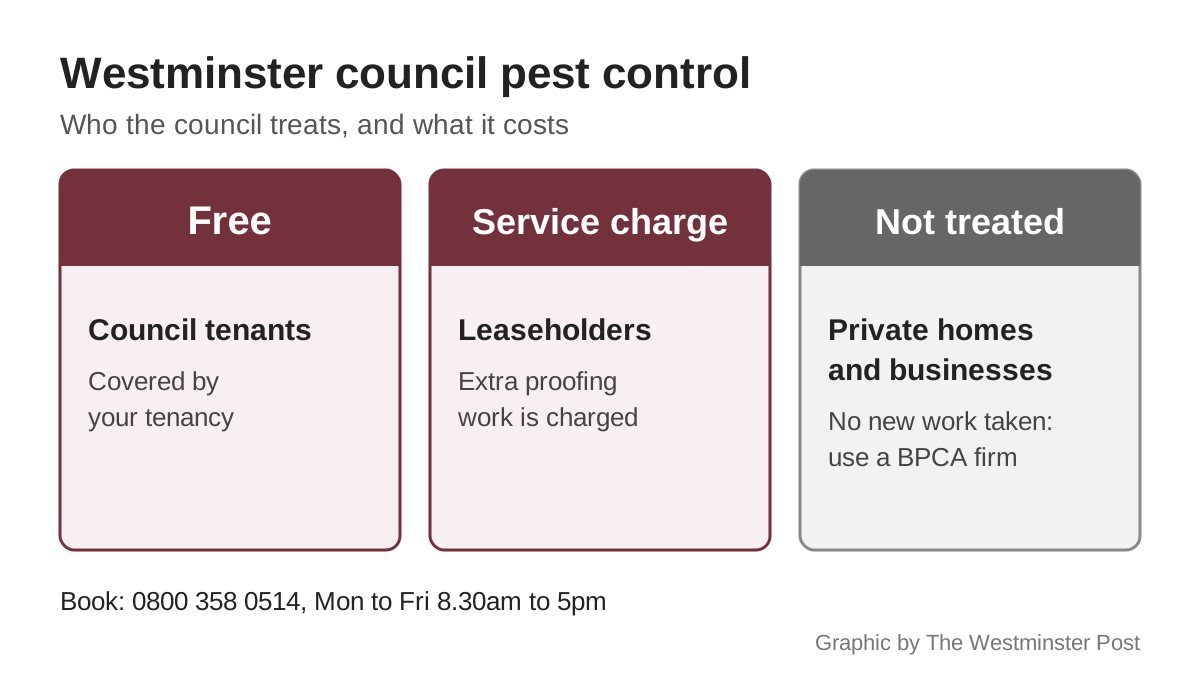

Westminster pest control is free for council tenants and in the service charge for leaseholders. The council takes no new private work. Who to call instead.
Westminster pest control is a council service, but not one most residents can use. Westminster City Council’s own pest control team treats homes owned by the council: if you are a council tenant it costs you nothing, and if you are a council leaseholder it is paid through your annual service charge. Private homeowners, private renters and businesses are not covered. The council says its trading arm “is not taking on any further work at this time” and points everyone else to the British Pest Control Association (BPCA) to find an accredited firm.
This page sets out who the council treats, which pests it covers, how to book, what happens on a visit, and what to do about rats in the street or in a privately rented flat.
Who the council will treat
| You are | Does the council treat your home? | What you pay |
|---|---|---|
| Westminster council tenant | Yes | Nothing: covered by your tenancy |
| Westminster council leaseholder | Yes | Through your annual service charge |
| Private homeowner | No | Use a private firm (BPCA can point you to one) |
| Private renter | No | Ask your landlord first |
| Business | No new customers | Use a private firm |
The council’s pest control page, last updated in May 2026, says the team works under service agreements for the Housing Department, the council’s own buildings such as libraries and offices, and its parks. Commercial work for private homes and businesses is limited to existing customers.
For council housing, the service is wider than your front door. The leaseholder pages say the team will also treat hallways, sheds, garages and community halls on estates. One difference to watch: if the officer recommends extra work as a result of a pest problem, such as proofing, it is free for tenants, but leaseholders pay for it themselves.
Which pests are covered
The council treats what it calls public health pests, plus two it counts as a “perennial nuisance”:
- rats
- mice
- bed bugs
- cockroaches
- tropical (Pharaoh’s) ants
- garden ants
- wasps
Squirrels and pigeons on housing estates are reported to your estate office or building manager, which raises a job for the pest team to inspect. The council gives advice only, not treatment, for foxes. It does not deal with flies, and it does not provide a control service for bees, which it notes are pollinators rather than pests; for both it points residents to the BPCA, and for bees to the British Beekeepers Association.
How to book
The council now takes bookings online, with phone booking still available. Council tenants and leaseholders need their 8-digit reference number to book.
- Online: through the council’s pest control booking system, linked from the pest control page.
- Phone: 0800 358 0514, Monday to Friday, 8.30am to 5pm.
- Email: pestcontrol@westminster.gov.uk
Appointments run Monday to Friday in two slots: mornings from 8am to midday, and afternoons from midday to 4pm. The officer phones before arriving and, if running late from a previous job, will call to give a new time or let you rebook.
Officers are council employees, carry City of Westminster identification badges, and hold RSPH pest control qualifications. If someone claims to be from the council’s pest team and cannot show a badge, do not let them in.
What happens on the visit
The first visit is usually a survey: a look around, questions about what you have seen, and an explanation of the next step. Treatment can mean bait stations, sprays, powders, gels or ultra low volume “fogging”, sometimes with checks on drains and small proofing jobs. If more visits are needed, the next one is booked before the officer leaves.
Things the council asks you to know:
- You sign a “Notice to Occupier” form with the health and safety information before any treatment.
- After a spray, it is better to leave the property for about 20 minutes. After fogging, you must stay out for about 2 to 4 hours.
- Keep children and pets away from any pesticide, and cover fish tanks.
- Bed bugs need preparation. You will be sent a guide. Beds, sofas and chairs are all treated, furniture pulled away from walls, rooms cleaned and cleared. The council says officers will not treat if the preparation has not been done, but if you cannot manage it, call and it will send extra staff to help.
- Dead rodents after treatment: call and the team says it will come the same day to remove them. If a smell appears because one has died under the floor, the council notes most take one to two weeks to stop smelling; it will try to reach the body or arrange for floorboards to be lifted.
Rats in the street
The council’s pest team does not put down poison on public roads and pavements. If you report rats in the street, it says it will inspect the area to find where they are coming from and pass its findings to the right team: Highways for defective drains and gullies, or Environmental Health if the source is a business or private home. A dead rat, fox or other animal on the road or pavement goes to the council’s street cleansing service for removal.
Restaurants are a known source, and the council does prosecute. In August 2026 it announced fines and costs of more than £37,000 against two restaurants, on Porchester Road and Horseferry Road, after its food safety officers found mouse infestations and closed both with Hygiene Emergency Prohibition Notices. If you see signs of rodents in a food business, report it to the council’s food safety team.
If you rent privately
The council will not treat a privately rented home, so the first step is your landlord or letting agent. Tell them in writing, with photos of droppings, damage or the pests themselves, and keep a copy. Many infestations come from gaps around pipes, broken air bricks or shared spaces that only the landlord can fix.
If the landlord does nothing and the problem is serious, the council’s private sector housing team can inspect the property and assess it under the Housing Health and Safety Rating System, which includes pests among the hazards it covers. Westminster also runs selective licensing in parts of the city and licenses HMOs, and licence conditions set out what landlords must keep in good repair.
Choosing a private firm
For anyone outside council housing, the council’s own advice is to go to the British Pest Control Association, which lists accredited member companies and runs an online enquiry service. When comparing quotes, ask:
- whether the technician holds an RSPH or BPCA pest management qualification;
- how many visits are included, and whether a follow-up is free if the pests return;
- whether proofing (blocking entry points) is included or priced separately;
- what they will use, and how long you need to stay out afterwards.
Frequently asked questions
Does Westminster Council do pest control? Yes, but only for council-owned housing, council buildings and parks. Private homes and businesses are not being taken on as new customers.
Is Westminster pest control free? For council tenants, yes: it is covered by the tenancy. Council leaseholders pay through their annual service charge, and also pay for any follow-up proofing work.
What pests does Westminster Council treat? Rats, mice, bed bugs, cockroaches, tropical ants, garden ants and wasps. It gives advice on foxes and does not treat flies or bees.
How do I book Westminster council pest control? Online through the council’s pest control booking system, or by phone on 0800 358 0514, Monday to Friday 8.30am to 5pm. Tenants and leaseholders need their 8-digit reference number.
Who do I call about rats in the street in Westminster? Report them to the council. It will inspect and refer the source to Highways or Environmental Health, but it does not lay poison on public highways. Dead animals on the street go to street cleansing.
I rent privately and have mice. Will the council help? Not with treatment. Ask your landlord in writing first. If they do not act and the problem is serious, the council’s private sector housing team can inspect.
Sources
- Westminster City Council: Pest control (updated 13 May 2026)
- Westminster City Council: Pest infestation, leaseholders (updated 25 September 2026)
- Westminster City Council: Two businesses ordered to pay over £37,000 for mice infested restaurants (28 August 2026)
Have your say